This is the #1 siding question we get from Bethesda, Rockville and Columbia homeowners. Both vinyl and James Hardie fiber cement are excellent products. The right answer depends on how long you plan to stay, your budget, and how the home looks today.
Cost (installed)
- Vinyl: roughly $6–$10 per sq ft installed for premium products like CertainTeed Cedar Impressions.
- James Hardie fiber cement: roughly $12–$18 per sq ft installed.
On a typical 2,400 sq ft Montgomery County colonial, that's a real-world difference of about $14,000–$20,000.
Durability
- Vinyl resists rot, insects, and moisture by design. It can crack in extreme cold and warp from grill heat or reflected sun off neighboring windows. Lifespan: 25–40 years.
- James Hardie is non-combustible, won't warp, and is rated to withstand Maryland's worst storms. Lifespan: 50+ years with a 30-year non-prorated warranty.
Look and curb appeal
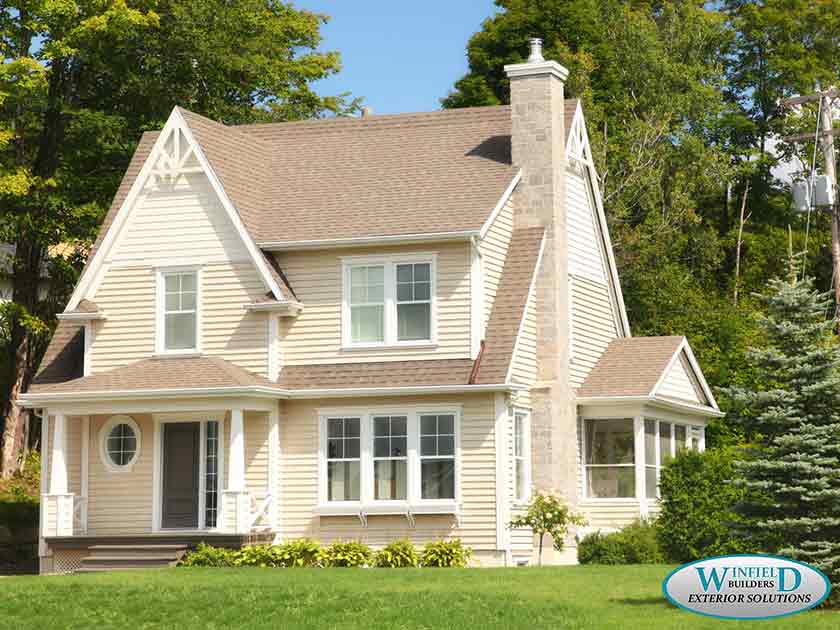
Hardie wins here, and it isn't particularly close. The 5/16″ thickness, deeper shadow lines, and ColorPlus baked-on finish read as a much higher-end product from the street. Vinyl has improved dramatically in the last decade — premium lines now mimic cedar shake convincingly — but it's still vinyl when you walk up to it.
Maintenance
- Vinyl: rinse with a garden hose annually. Never paint it.
- Hardie: rinse annually, repaint every 12–15 years (the ColorPlus finish is genuinely that good).
Resale value
Remodeling Magazine's Cost vs. Value report consistently ranks fiber cement siding among the top 3 exterior remodels for ROI — typically 75–85% recouped. Vinyl ranks well too (around 65–75%), but Hardie tends to attract more buyers and shorten time on market, particularly in Bethesda, Potomac and Chevy Chase neighborhoods where buyers expect higher-end finishes.
So which should you choose?
Near the water, the fastener spec and flashing behind the panel matter as much as the material. See how we approach it on our Annapolis siding page.
If you're staying 10+ years in a home worth $700k+, James Hardie almost always pays back. If your budget is tight, you're prepping the home for sale, or the existing siding is vinyl and the neighbors are vinyl, a premium vinyl install is a smart, durable choice. Both are dramatically better than the builder-grade siding most Maryland homes shipped with in the '80s and '90s.