Gutters are the most ignored part of your home — until water starts pooling against the foundation or a chunk of fascia falls into the flower bed. Most Maryland homes get 18–25 years out of a seamless aluminum system; sectional gutters from the 1990s are almost always past their date.
10 signs it's time to replace
- Sagging or pulling away from the fascia. The hangers are pulling out and the slope is gone.
- Visible cracks or splits — even small ones expand fast in Maryland freeze-thaw winters.
- Rust spots on steel gutters, or paint peeling from the inside out.
- Water marks on siding below the gutter line — a sign water is constantly overflowing.
- Mildew, mulch washouts, or eroded flowerbeds below the downspouts.
- Basement seepage after every storm — the foundation is getting hammered with rooftop water.
- Rotted or soft fascia boards. Push gently with a screwdriver; if it sinks in, water has been migrating behind the gutter.
- Pooled water in the gutter 24 hours after a rain — slope is wrong or the gutter has bellied.
- Nails, screws or fasteners on the ground after windy days.
- Gaps at the seams on old sectional gutters — modern seamless runs eliminate this entirely.
Repair, clean, or replace?
- Clean if the system is under 10 years old and the only problem is debris.
- Repair isolated issues (a single hanger, one downspout, a small leak) on a relatively young system.
- Replace when sagging, rust, or fascia damage is widespread — patching old gutters in Maryland's climate is throwing money away.
What we recommend in Maryland
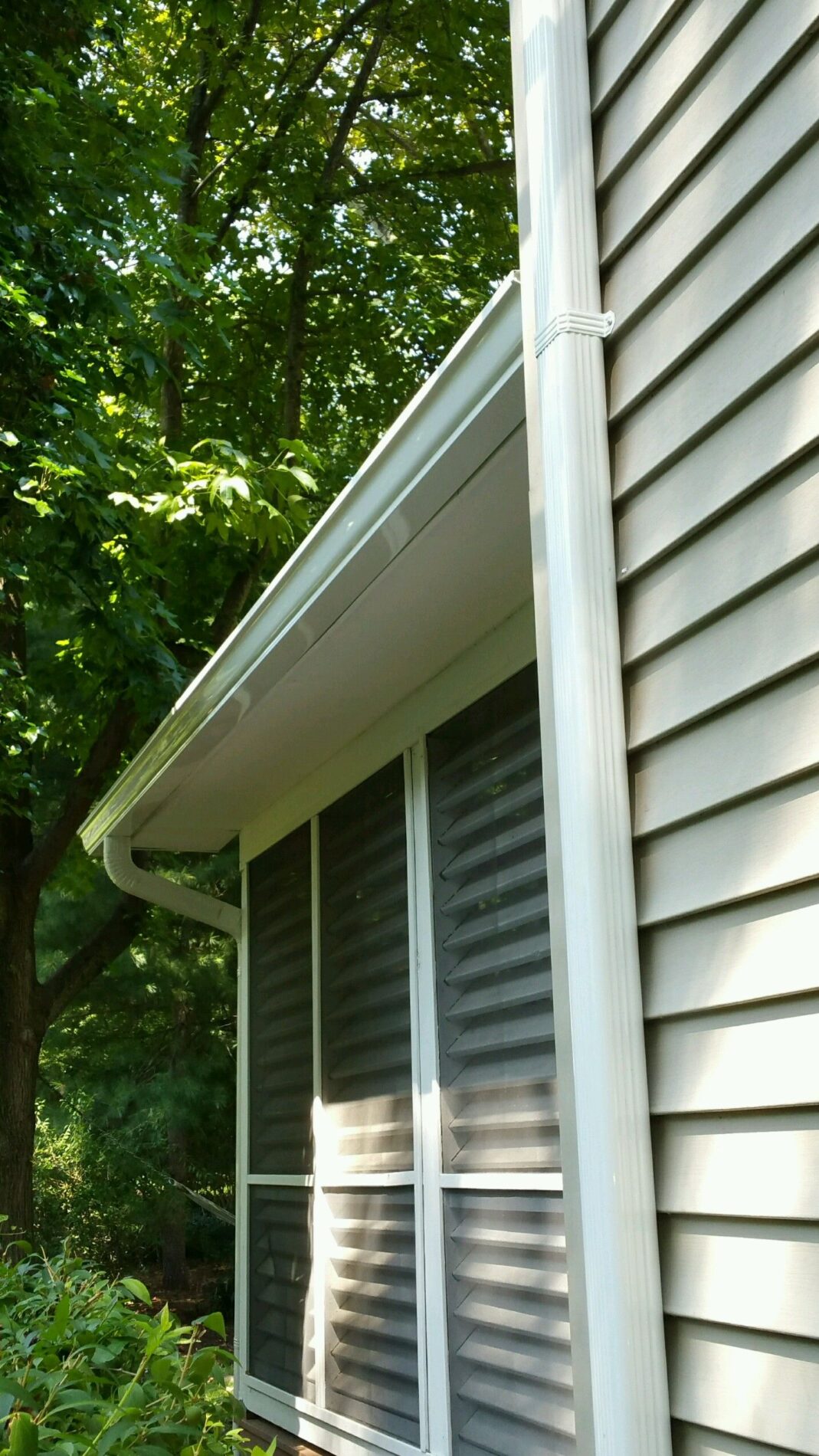
Seamless 6″ aluminum gutters with .032-gauge aluminum, hidden hangers spaced 24″ on center, and properly pitched downspouts that discharge at least 5 feet from the foundation. If you have heavy tree cover (every Bethesda and Chevy Chase property we touch), add a quality micro-mesh gutter guard — it's the difference between cleaning twice a year and basically never.